With the exception of “Winners Take All”, my office book club pick of the month; I spent February reading books by black authors. This month included: short fictional stories; memoirs on activism and an in-depth analysis on the future of social good.
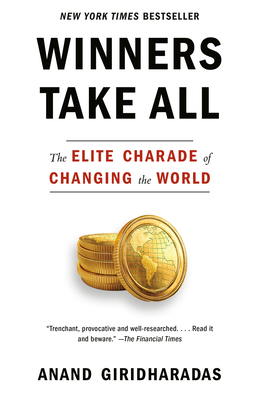
Winners Take All: The Elite Charade of Changing the World by Anand Giridharadas
My rating: 4/5 stars
“Inspire the rich to do more good, but never ever tell them to do less harm; inspire them to give back, but never, ever tell them to take less; inspire them to join the solution, but never, ever accuse them of being part of the problem.”
Winners Take All by Anand Giridharads
This is a deeply researched and well written book on the current approach to changing the world and the problem it poses. ‘Winners Take All’ reads like a literature review or long essay; every page and chapter has real examples of real ‘elites’ and all the information is put together to present an argument which is essentially this: “we think we are changing the world by doing x, y and z but we’re not”.
I have to say, Giridharadas makes a very convincing argument. Not that I needed much convincing anyways. Through each story, interview, chapter, the recurring message is that rich people/corporations are more than happy to help the less fortunate/give back to those in need as long as they can remain rich and as long as the methods/systems in place that allow them to be so ridiculously wealthy are not compromised.
People are relying more and more on private foundations, tech corporations, billionaires etc to solve the problem of poverty, healthcare, education and more because over the years the public’s trust in the government has declined. Also, putting trust in these corporations seems like a win-win right? Because here are wealthy people/entities with no limitations, who can donate as much as they want to any cause at any time without having to rely on the government to do the bare minimum. But why do these problems exist in the first place?
Inequality. Inequality is probably the overarching theme of this book. Why does it exist? How does it exist? How can the problem of inequality be solved. Can it even be solved? Giridharadas analyzes and interviews many ‘elites’ – some who have come to recognize that they are part of the problem and who genuinely feel like by giving back they are at least somewhat making things better. They agree that wealth redistribution and breaking down the unfair and existing systems/institutions in place will probably be the best way to solve inequality; but they are only able to agree with this in theory – no one actually wants to do it.
Definitely recommend reading this one if you’re interested in what the future of social good and business looks like. I also recommend reading the authors note at the end (if you’re someone who doesn’t normally do so) because Giridharadas uses that section to talk about his own perspective and also acknowledges how he has been part of the problem.
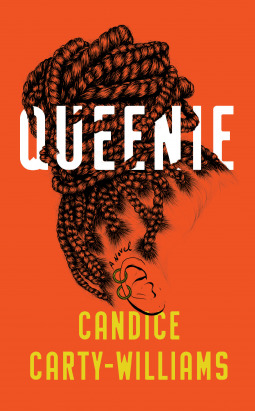
Queenie by Candice Carty-Williams
My rating: 3.5/5 stars
Queenie is a pretty decent read about a young black woman learning to be comfortable in her own skin. This book reads like a rom-com. Or maybe just a comedy. Queenie herself comes across a very dysfunctional character, even quite annoying actually. It’s like watching the lead in a movie make the wrong decisions again and again and again and you just want to scream “girl wtf is wrong with you, get your life together.”

I really liked Queenie’s female friendships and even the relationship with her extended family. I felt the “relationship” with her boyfriend lacked a strong backstory, it kind of made it hard to resonate with some of the issues Queenie was dealing with in that relationship. It just didn’t really have any depth.
I did laugh out loud quite a bit reading this one. I think this story excellently uses humour to deal with some heavy subjects. If you can get over Queenie’s annoying decisions in the beginning of this book (okay maybe like the entire book) you’ll realize that there’s a deeper reason for most of her actions.
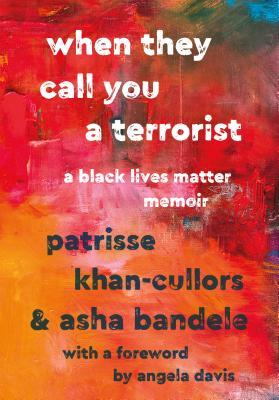
When They Call You a Terrorist: A Black Lives Matter Memoir by Patrisse Khan-Cullors, Asha Bandele
My rating: 5/5 stars
“And if ever someone calls my child a terrorist, if they call any of the children in my life terrorists, I will hold my child, any child, close to me and I will explain that terrorism is being stalked and surveilled simply because you are alive. And terrorism is being put in solitary confinement and starved and beaten. And terrorism is not being able to feed your children despite working three jobs. And terrorism is not having a decent school or a place to play. I will tell them that what freedom looks like, is the push for and realization of justice, dignity and peace.”
When They Call You a Terrorist
Patrisse is a founding member of the Black Lives Matter movement. To understand how and why she came to start that movement you have to understand the tragedies and events that occured in her childhood and adolescence, the domino effect it would have on herself and her family. I loved the stories about her dad and her second brother Monte – they were also the stories that broke me the most.
This memoir not only tells a compelling story about Patrisse’s life but every chapter reads like a wake-up call. Patrisse highlights and explains the systems in place that exist solely to prevent black and brown people from thriving. I couldn’t possibly do justice to her words so I’ll just share a few of them below:
Patrisse explains the business of prison and how entire organizations benefit from criminalization of black and brown people:
“Companies pay for the benefit of having prisoners, legally designated by the Constitution as slaves, forced to do their bidding. Prisoners are cheaper than even offshoring jobs to eight-year-old children in distant lands. License plates are being made in prisons along with 50 percent of all American flags, but the real money in this period of prison expansion in the 80s, 90s and early 2000s is made by Victoria’s Secret, Whole Foods, AT&T and Starbucks. And these are just a few. Stock in private prisons and companies attached to prisons represents the largest growth industry in the American market as the millenium lurches towards its barbed-wire close.”
When They Call You a Terrorist
Many young black boys are wrongfully incarcerated every day, sent to juvie for petty crimes or you know just for walking down the street, living, breathing. When they are eventually released from prison it’s hard for them to create a life for themselves due to having a criminal record:
“If you have government housing benefits you cannot have anyone living with you if they’ve been convicted of a crime. Even if they are a juvenile. And even if they are incapable of caring for themselves because of an illness. And even if they cannot get a job because even the most low-level jobs won’t hire someone with a conviction. In California there are more than 4,800 barriers to re-entry, from jobs, housing and food bans, to school financial aid bans and the list goes on. You can have a two-year sentence but it doesn’t mean you’re not doing life.
When They Call You a Terrorist
In one chapter, Patrisse talks about her brother Monte who was dealing with Mental Health issues and was constantly denied access to medication in prison:
“I wonder if heart meds are withheld from people, cancer meds, an asthma pump? We know Hep C treatments are. And naloxone which can reverse an OD, has been. We certainly know meds that would slow the onset of AIDS have been kept out of reach of certain groups of people. What kind of society uses medicine as a weapon, keeps it from people needing to heal, all the while continuing to develop the drugs America’s prisons use to execute people?”
When They Call You a Terorist
This double standard in the way black men are treated in contrast to white men in society is clear as day but it’s still so mind-boggling when it’s pointed out:
“Later when I hear others dismissing our voices, our protests for equity, by saying All Lives Matter or Blue Lives Matter, I will wonder how many white Americans are dragged out of their beds in the middle of the night because they might fit a vague description offered up by God knows who. How many skinny, short, blond men were rounded up when Dylan Roof massacred people in prayer? How many brown-haired white men were snatched out of bed when Bundy was killing women for sport? How many gawky white teens were stopped and frisked after Columbine or any of the mass shootings that have occurred in this nation, the immeasurably wide margin of them by young, white men?”
When They Call You a Terrorist
I am in awe of the woman that is Patrisse Khan-Cullors. I am in awe of her perseverance through difficult times; I am in awe of her determination to change the world; and I am in awe of her belief in a better future. This book is SO important and I think everyone should read it!
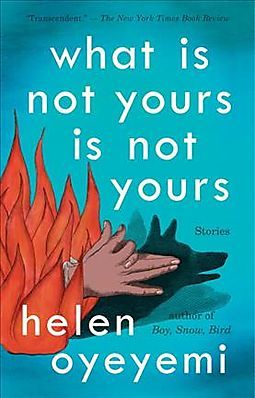
What Is Not Yours Is Not Yours by Helen Oyeyemi
My rating: 3.5/5 stars
“What Is Not Yours Is Not Yours” reminds me of high school English class – when you read a book as a class but don’t understand anything until the teacher breaks down all the metaphors and symbolic languages.
There are 9 short fictional stories in this collection, and I have 2 favourites; probably because they were the only ones I understood from beginning to end lol:
- Presence – this one gave me major WestWorld (the tv series) vibes
- A Brief History of the Homely Wench Society – think frat bros & sorority sisters with a sprinkle of activism
My least favourite was probably “Is Your Blood As Red As This” – all I can tell you is that it’s about a girl and her puppet and a school for puppeteers ? I think at some point even the puppets were narrating the story and my mind just could not keep up.
This collection of short stories left me intrigued and utterly perplexed but despite my constant state of confusion, I have to admit I found myself enjoying it.
 Dreaming of Book Pages